Showing posts with label world issues. Show all posts

16 March 2017

Late night tracks / Jean Chaumont

From a September 2016 concert with pianist Michael Bond in Hopewell, New Jersey

Recently I've been on a bit of a jazzy kick, thanks to the movie musical La La Land. My feet have been tapping ever since I left the theater. That opening scene alone is worth the watch, but the rest of the soundtrack is a great repeated listen for its splendid fusion of jazz, pop, latin, and bits in between. For better or worse, I find that Ryan Gosling's character and I have a similar taste for big band jazz. I like my horns brassy, my rhythms quick, my saxes sassy. (Fun fact: No body doubles for that pianist!)

And yet, I'm drawn to tonight's listen: a more melodic and contemplative form of the genre, courtesy of French guitarist and composer. Jean Chaumont. It's not exactly music to fall asleep to. It's no Kenny G (thank goodness -- no offense, KG). Clearly it's kept me awake. It's thoughtful, sometimes challenging, hitting me in a way I can't quite place.

02 November 2015

Creative Good / Stuffed toys of favorite foods to help rural India, Part 2


Happy Bellies is a Kickstarter project bringing fuzzy version of favorite Indian foods into our arms, while delivering life-saving technologies to rural India.

Here's Part II of my conversation with Diana, one of the creative minds behind the initiative. We get candid about Happy Bellies and get a 'lil bit more personal.

If you missed it, check out Part I here.

///

Stop 3

We meandered over to Chinatown, since Diana was craving some quality Chinese food. We were pretty stuffed by that time, but couldn’t resist sitting down at Dim Sum Garden (1020 Race St.) ordering xiao long bao and sheng jian bao (steamed and pan-fried Shanghainese dumplings, respectively).

Me: What was your first exposure to Indian food? Or India?

Diana: I don’t remember … Indian food wasn’t something that my family ate regularly. My first actual exposure to the food was probably when I first studied abroad during college. That’s when I understood that there were different types of Indian foods, not just naan and chicken tikka masala. Every region has its own specialty. In South India where I was, they had the masala dosa, the idlis, the vadas, the filtered coffee -- all these very, very special things.

We then started talking about food poisoning, different regional foods, then diverged on a tangent to the documentary “Searching for General Tso.” Discussing the film lead us to comparisons between Indian and Chinese food and…

Happy Bellies, Chinese style?

If you were to make Happy Bellies out of Chinese food, what would you make?

That’s hard! You need to help me with that. Chinese food, like a distinct kind of shape… Like a char siu bao. People have already seen those on keychains, right. You can do it out of dimsum: har gaw, siu mai, char siu bao, chicken feet…

[I laugh] I don’t know about chicken feet. 

I guess you could make it out of dim sum, but it would be hard to make it out of a stir-fry. I don’t know how you’d make a Happy Belly stir-fry.

Unless you had a mini wok with smiling vegetables in it or something.

Haha yeah … Maybe a fortune cookie?

It’s true that some of it’s been done. For instance, I’ve seen dumpling keychains.

I have too. And I mean, they’re really cute and of course [East] Asians would do it first. They like everything cute. I don’t think Indians care about it as much.


You be the judge: Cute or no? via Happy Bellies

What is considered cute in India?

That’s a good question. I don’t think they have a good sense of that. Or, usually what many people think is cute, I think is tacky. Our soft toy manufacturer thought that nobody would buy our stuff. Hopefully that’s not the case, but we’ll see.

Why did he think that?
Because he thought, why would people buy food? He eats this stuff everyday. And so he said, You need to make it cuter, with big eyes and big features. You could just do that more. And we said no, this is how we wanted to do it. We thought this [way] was cute on a more subtle side.

Ooh yeah, ok. Design in India. Everything’s super flashy and colorful, patterned and not just nice Indian patterns like pretty paisleys and whatnot, but like bling in your face: too much color, too much sparkle. Being subtle is not really a thing.

So if the samosa were covered in sequins, maybe it would appeal more?

Appeal more to the mass Indian market? I don’t think that’s quite the audience.

Then who is the audience?

Maybe non-Indians who like Indian food and appreciate it. Indians abroad who miss this stuff and think it’s funny? People who have been to India and have eaten the foods and are like, that was awesome.

What is the aim besides raising money for Essmart?

Sharing our love for Indian food! And it’s also funny. [The characters] do come with educational cards but honestly, you’re not going to buy something you haven’t already experienced yourself. If you’ve never eaten an idli, you probably don’t want an idli because you would think, “That’s weird. I’ve never heard of it.”

I’m actually curious to eat one! And I’ve never tried an idli.

Really?

Yeah! Now I look at the toys and wonder what an idli tastes like.

I should get you an idli. We should go back to that chutney place [we passed earlier] and get one.

[We laugh.]

But yeah, there could be potential in Indian restaurants. The big chains might want to buy some and sell them as souvenirs. We could see them in the tourist market in India. But I’m not quite sure who the customer might be.

I guess that’s what Kickstarter is. An experiment. Have you ever done one?

Never done one before. We’ve done an Indiegogo [campaign], but Kickstarter is, like, you need to hit a goal in order to actually get all the money and be funded. So, it’s interesting because now we’re trying really hard to push.

So how have you been getting the word out?

Fortunately, we have a network. One of the girls who is on the team – Avantika, the Stanford product designer -- has West Coast networks, which is great. Jackie and I have East Coast networks. But, we want to go viral and we’re not quite sure how to get to that. Also, we’re not sure if it’s a product that can go viral so, who knows! 

So we’ve been tweeting, Facebook-ing, Instagram-ing, blogging, food touring, and going to Indian restaurants and food trucks to put up posters and talk to owners and have them promote our stuff as well. And then, I’ve been emailing a lot of food blogs, start-up blogs, and I even started looking at Asian American blogs because I’m Asian American.

Maybe you could find one of those YouTube stars. [See Part I for vague reference.]

[Gasp] Do you know any Indian American YouTube stars?

No, I know very few YouTube stars, if any at all. But that could be interesting.

Stop 4 

A craving for something refreshingly sweet to offset the savory spurred us to search for bubble tea. As we perched in the open storefront window of Tea Do (132 N. 10 St.), I asked a few final questions – really, the last ones this time.


Thanks, Josh!

So tell me more about learning to cook Indian food, after 3 years* of living there.

Right! I only have recipes because I don’t know how else to do it. I have Indian friends who put spices together and do something with it, but for me … I have no idea what turmeric by itself tastes like or what coriander powder by itself tastes like or what a garam masala is. How do you adjust the spices and in what proportions and how much do you put and how powerful is a teaspoon of all of these things? I just don’t know. So far, I’ve been following recipes and measuring out spices.

Where have you mostly been getting your recipes from?

There’s a cookbook that Hannah, my husband Josh’s sister, bought for him -- and I just took it. He wasn’t going to use it anyways. It’s very UK based.

The other cookbook I brought back from the US was pretty appropriate for the cooking implements that I have in India. Like, I bought a mixie recently. A mixie is like a grinder or a blender. It has different attachments that do different things, and every household has one. So, I have one now!

I do a lot of curries in general because I like curries. Chicken curries, usually.

You’re being saucy.

I like being saucy. I like sauces. I like rice. I still haven’t made a chapatti on my own yet, though. I’ve made chapattis at other people’s houses. They are little circle bread things made out of wheat flour, basically flour and water. You roll them out and put them on the [flat pan].

It sounds like lots of fun.

Yeah. You have to understand … Like as I was saying before, I didn’t grow up with Indian food. So I don’t know what flavor I’m actually aiming at, and I don’t know how to adjust the flavors, either. The dish I end up with isn’t authentic since I change parts of the recipes to make them better for my taste. Fortunately Josh, who is Indian, is not “pure.” He doesn’t really care as long as he can eat it. So I make my own type of food.

Tell me a little more about the spice box.

Oh, my spice box! I bought it at Metro, which is like the Costco of India. It’s like a Tupperware container but made of stainless steel, and inside there are seven bowls for spices and a little spoon. So far I put in turmeric, coriander, cumin, garam masala … I think I put in some fennel seeds. And cinnamon!

What I didn’t realize about spice boxes is the ease of cross contamination of my spices. I was telling you this earlier, but I make French toast pretty often and one day, I tried to use the cinnamon from my spice box. It ended up tasting like turmeric and other spices, like a masala French toast. French toast masala.

But that could be tasty!

Yeah… but not when you’re expecting something else. [laugh] So I realized if I wanted pure spice, I would have to take them directly from the packages they come in.

So, my spices! It’s really fun. And I think in Indian food you just mix spices anyways, so they only give you one spoon for everything.

Maybe it’s all about the mixing.

Yeah it’s all about the mix. The masala mix.

Is that what masala means?

Spices. Usually a mix of spices.

Interesting. So a tikka masala is…?

What’s tikka? I dunno. That’s evidently a British dish.

That’s what I’ve heard, too.

But it’s in India now. [in a singsong voice] Chicken tikka masala! Also in Minions.

Minions?

They say “tikka masala.”

///

* Note: Diana has actually been living in India for precisely 39 months.

To learn more or simply get your dose of cuteness and humor, head to the Happy Bellies Kickstarter page or their website.

///

“Creative Good” is a new series on creative ways to bring good to communities around the world. I love hearing about new initiatives, so if you have suggestions for a company, project, or person (or something else!) to profile, get in touch!

01 November 2015

Creative Good / Stuffed toys of favorite foods to help rural India, Part I

Imagine your favorite Indian restaurant: the spices in the air, the richness of curry, the crunch of samosas, the buttery-ness of fresh naan – all ending in a cozy food coma.

Ever wish you could extend that delicious comfort? Well, you can: in the form of cute and cuddly stuffed toys called Happy Bellies.

courtesy of Happy Bellies

Happy Bellies is a staff-picked Kickstarter project launched by three food lovers living in Bangalore – Diana, Jackie, and Avantika – who want you to be able to hug your favorite Indian foods, no matter where you live. The proceeds will go towards bringing life-changing technologies to villages in India, through Diana and Jackie’s non-profit Essmart Global.

** The campaign ends on November 3rd, so don’t wait to check it out! **

Diana is a close friend of mine from grad school and happened to be in Philly earlier this month. While we embarked on our own mini food crawl through Center City, we chatted about Happy Bellies, the different characters and crews, product design, and Diana’s efforts to learn Indian cookery – with plenty of tangents in between.

This is Part I of our meanderings, with Part II to follow.

///

Stop 1


We started at Metropolitan Bakery (262 S. 19th St.), a Philly mainstay. I wanted to try the millet muffin, which I had heard about on the podcast the Local Mouthful. While our conversation there wasn’t really quote-worthy for this post, we did have some laughs about AirBnB’s Obama O’s, YouTube stars, and savvy swag by presidential candidates.


Stop 2

Fried chicken and donuts? Yes please! The conversation got back on track at the Center City location of Federal Donuts (1632 Sansom St.), over za’atar-spiced fried chicken accompanied by a particularly delicious honey donut.

Me: How did you come up with the idea for Happy Bellies?

Diana: Actually, nobody on the team did. Esther, my college roommate, had come to India to visit me last year in August. We did this crazy all India tour, and we were eating a lot of food. I think we were in Shimla in north India, but were eating a south Indian food, idlis. She’s very visual -- and is also Asian and in architecture – so Esther was like, “Oh these look like little pillows! So cute!” And then, “What if we made them into little pillows?” That was the question.

What are idlis?

They are made out of fermented lentil and rice. So they’re like steamed rice cakes in a way, but a little sour. Idlis are a very popular south Indian breakfast food. But they’re kind of tasteless until they take on the flavor of the sauces. It kind of relates to the character ‘Lil Idlis. We made them little children because they have no taste of their own. They’re very impressionable.

So then how did you go from, “Maybe we should make them into pillows?” to starting an Essmart spinoff -- for lack of a better word?

I don’t think we took it seriously until June of this year. We were in a fundraising mode, trying to be creative and seeing if we can supplement our operations with something completely different. I don’t know if there’s quite a market for it, but it’s fun and ridiculous – kind of like us.

Where did the name Happy Bellies come from?

I think we ripped it off of somebody.

[We laugh]

There’s this bakery near our office that’s called Happy Belly Bakes. It’s one of my favorite bakeries because they have amazing cupcakes, my favorite being the banana walnut cupcake.

There’s also a thing called “Delhi belly,”when you go to India and you eat the food and get diarrhea. It’s really bad. So, we’re still dealing with Indian foods but we are in contrast to Delhi belly. We are Happy Bellies! Yay!

So how did you pick out which foods to highlight and make into characters?

We chose the foods mostly based on their shape – and, I guess, how well known they are. I mean, personally my favorite food is not on the list. It would be a chicken kotu parotta.

What is that?

A parotta is south Indian, sometimes called a Kerala parotta. It’s a flatbread that’s layered and really rich. Like a flat croissant. I don't know how to explain it… It’s awesome. It’s like really oily, full of ghee and made up of a lot of layers.

And what do you eat that with?

Usually it comes with some kind of korma, like a veggie curry. But the way I eat it is kothu parotta. “Kothu” means “cut.” So, on a flat area, [chefs] take this stainless steel cup and they go boomboom-boomboom-boomboom-boomboom-boom and they chop up the parotta. Then they mix in egg and chicken and masala spices and cilantro. It’s so good. The first time I ate it, it reminded me of [Chinese] chow fun.

Ooh, interesting!

I was like, “Oh my gosh!” And the best one I’ve ever had was in Polachi, Tamil-Nadu, down south close to the Kerala border. The parottas are crispier there. It’s ridiculous. So good. But … chopped up dough and chicken don’t make a good stuffed animal.

It doesn’t look like anything.

Likewise, you can’t do a gravy, like a butter chicken or --

Or a tandoori chicken.

Yeah, that doesn’t look like a good stuffed toy.

[We both laugh.]


But what do look good are south Indian breakfast foods, which is a cuisine all in itself so you need to honor it. [Our characters] are the trinity, the triumvirate of the south Indian breakfast foods. Like the masala dosa, which is similar to an idli but the batter isn’t as fermented. It’s like a crepe with potatoes inside. We named it Dozing Dosa because it makes you really sleepy after you eat it.

I like that name.

Yes, it’s very cute. And then we have idli because it’s also classic, and they’re really cute.

Then vada. They’re kind of like savory donuts. We made them Auntie and Uncle Vada because vada are something that oftentimes people make at home and serve around teatime. They could also be a morning thing, but we needed something to represent south Indian hospitality.

Everyone also seems to be an auntie and uncle.

Yup! That’s true. If you don’t know the name of your elder, just call them auntie and uncle and that’s perfectly fine.

So we chose those [three]. For our other crews - our other groups - we had wanted to do, for example, something based on foods in Kerala because they’re really funny-looking. But we decided not to do that because nobody knows what they are outside of India -- like an appam, or an idiyappam. We ended up going with the street foods because they’re a bit more famous.

We had to do a samosa. Even though I don’t really eat that many samosas when I’m in India, everyone knows what a samosa is. So we made it Superstar Samosa for that reason ‘cause it’s so famous. And then jalebi wasn’t on our list initially –

Is that the one that looks like – no offense --

It looks like poop!

I was gonna say worms!

It’s basically deep-fried dough coated in a sugary syrup. Our first iteration of the jalebi was much thinner, much more like jalebi. But we wanted it to be cuddlier, so we asked the manufacturer to stuff it more. Then it started to look like a pile of poop, and now… We’re going to change the dimensions. It needs to be cuddly but can’t look disgusting.

[We both laugh]

Then we chose pani puri, which are little fried crispy balls that are filled with flavored water.

Now, do you have a favorite character?

It’s hard to say. [pause] On the website, I wrote that it was the idli because Avantika already took the dosa. I would get the dosa, though. It’s the cutest and most accurate. The idlis are also very cute, but our first prototypes were closer to life size, which I thought were adorable. But we made them larger so that all together they’re like a cushion. I’m not quite sure how I feel about it.

So when we sent our stuff to the designer, our manufacturer –

What kind of manufacturer are you working with?

He’s a soft toy manufacturer. We just Googled a lot and found a guy in Bangalore who was actually decently responsive.

Are they all handmade?

[The fabric] is cut with machines but the embroidery is hand done.

How are you hoping that the Kickstarter will relate to Essmart, either in the short-term or the long-term?

In the short-term, fundraising. We’re funding it out of Essmart money and we’ll take all the proceeds back to Essmart as a revenue stream. Will it be a long-term thing? I have no idea. If it’s successful and people want to buy them, who knows, maybe we’ll set up another company and sell it. But right now we’re just seeing where the Kickstarter goes, and if there’s interest.

///

Check out Part II for more on Happy Bellies, glitter and sparkles, 
the struggles of cooking Indian food, and more.

To learn more or simply get your dose of cuteness and humor, head to the Happy Bellies Kickstarter page or their website.

///

“Creative Good” is a new series on creative ways to bring good to communities around the world. I love hearing about new initiatives, so if you have suggestions for a company, project, or person (or something else!) to profile, get in touch!


13 October 2014

Late night tracks / Gueldy René


Another late night, and another singer-songwriter!  And lest you think my musical tastes run one genre wide, take a listen.  Gueldy René is different.  In his own words, "My guitar is my weapon, and peace is my goal."  He's fighting prejudice, injustice, corruption, and poverty with his music.  Whew -- makes me feel lazy in comparison!

Gueldy is from Bois Neuf on the outskirts of Cite Soleil, Haiti's largest slum.  The place has a violent reputation, but he and others are trying to change that.  I first heard about Gueldy from friends and acquaintances working in Port-au-Prince.  They launched an Indiegogo campaign to help record his first album, and with the help of many backers he's on his way to the studio!

While I've never met Gueldy in person, his charisma in the video above -- a song written in the wake of the 2010 earthquake (with a great little back up singer) -- and in others makes me like him a lot.  But it's his lyrics and the meaning behind his songs that really launch him beyond just "nice" music.


Here there is a clip from his song "Konbit," a Creole word for cooperative communal labor that is the essence of community and working towards a future together.  The lines that struck me the most:

"The winds of change are coming.

...

Konbit, konbit, to save our nation
Konbit, konbit to save our youth."


The song calls for education, for governmental accountability, for mutual respect, for "democracy free of demagoguery."  Even for clean canals and planted trees.  It seems like a laundry list of impossibilities, but there's progress being made through various communal efforts (like Konbit Soley Leve) and the help of outside organizations to get things rolling.

Back in 2011, I visited Haiti for a research fact-finding trip (or, a "I don't know what I'm getting myself into but here goes!" kind of trip).  The Tall Man (at the time my Tall Boyfriend) and I were too chicken to visit Cite Soleil during most of the week, but we finally threw reservations to the wind when we were given the opportunity to tag along with friends from Haiti Communitere, the NGO we were staying with.

What had I expected?  Maybe something scary?  I had been to various parts of other development countries before, but never in a post-disaster situation and never feeling so out of my element and exposed.  I have written a bit about this before but will write again that what I found was stunning.

One of my favorite photos from the trip

Clean, paved roads.  Planters with trees and saplings along the drainage trenches.  A nascent recycling operation to encourage people to clean out the clogged canals and earn some income.  This was accomplished with the initiative of a then-13 year old who was tired of having his shoes reeking with the stench of sewage and wanted things to be different.

So the neighborhood of La Difference within Trois Bébés in CS transformed over time with tireless work from the community, and more neighborhoods are undergoing change as you're reading.  (There is even a Cite Soleil Peace Prize!)

Change (chanjman in Creole) comes with a soundtrack, and one of those voices is Gueldy's.

Good night for now!

18 August 2012

Students finally able to "duck and cover"


A student and his professor at Bezalel Academy of Art and Design in Jerusalem have designed a desk that can withstand 1 tonne of vertical force -- what they call an "earthquake proof table" that students can use to "duck and cover" during an earthquake.

It seems like an interesting concept, especially in developing countries where building construction is often sub-par.  However, the article featured on GOOD suggests that these tables can substitute for the more costly measures of wall reinforcement or reconstructing schools to be more earthquake-resistant.  While I agree that this kind of furniture could save lives and save money in light of more difficult infrastructural and architectural changes, I wonder if it might become a way to not improve construction methods because desks essentially provide the safe roof overhead.

The table is still a pretty great design innovation, in spite of these larger questions of feasibility and intention in the longer run.   It's also certainly creative and makes me rethink what really is part of the build environment that can be leveraged for life safety while being well designed.

09 October 2011

1 litre, lanterns of light

In any conversation about working in developing countries, the term "capacity building" comes up time and time again - but what does it really mean, or begin to even look like?  And what is the role of our education at MIT in relation to locally-grown knowledge?

In our eLuma project meetings, there has recently been quite a bit of discussion about training and knowledge transfer.  As a possible exercise or real life example of 'capacity building,' one of our teammates brought up the example of the "bleach and water light bulb" - which I didn't quite understand until watching this video:


For more information about the MIT-seeded, community-grown initiative, check out the organization, called Isang Litrong Liwanag.

21 September 2011

Be serious or paranoid?

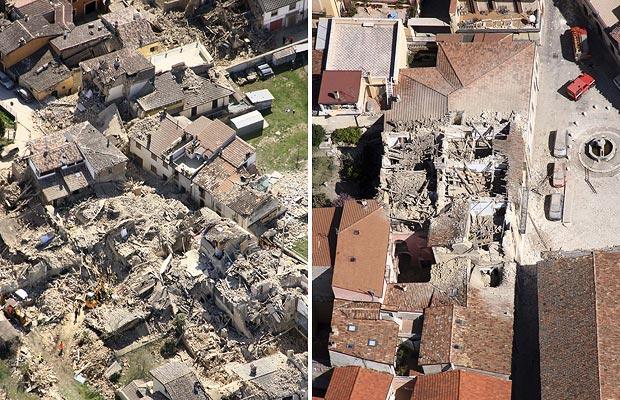
 from Times Online aerial photos

As we in Boston saw with Hurricane Irene, sometimes official predictions of natural hazards and preparations outweigh what actually ends up happening.  Girls in my dorm were decidedly underwhelmed by the winds and rain, leading to a general skepticism about "the boy who cried wolf."

But in other cases such as the L'Aquila earthquake in 2009, seismologists are being charged with manslaughter for NOT being serious enough about the data received before the quake.  An article in The Chronicle of Higher Education describes the start of the trial, leading to questions about the exactness of predictions and human attitudes towards hazards.


Is it paranoia or preparedness?

This semester I am taking a course with Prof. Jim Wescoat, Disaster Resilient Design, which lays out a theoretical and practical framework for thinking about and applying these issues.

The topic also fits in with my thesis and makes me consider the role and responsibility of professionals and academics is within the field, as well as what it really means to "build back better."  This last phrase is thrown around so much by NGOs, the government, and whoever else is involved in Haiti or elsewhere.  Is "better" an objective or subjective term?  If it's the latter, who determines it?  How can we know if one strategy is successful without 'testing' it in the next big quake/fire/hurricane/famine, etc.?

Although I can't address all (or even some) of these questions within the scope of a one-semester MArch thesis, it's worth mulling over in the back of my brain.

09 August 2011

Food for thought


While writing a Katerva blog post about the Oxfam GROW campaign, I came across this fun video that is basically a brainstorm of favorite foods from people interviewed all over the world.

What are yours?

I would agree with the noodles person, particularly if they were 'soup' noodles.  Cheese would also be another, yum!

08 May 2011

Cairo's garbage people

In my last thesis prep review, Nassar had suggested I look at precedents for locally-organized sorting methods.  He mentioned the Zabbaleen (= Garbage people, in Egyptian Arabic), a community that acts as Cairo's informal garbage collectors, since I'm looking at developing methods and techniques for sorting and processing rubble.

One intriguing fact about this community of about 70,000 Coptic Christians is that their municipal solid waste services are seen as one of the most efficient in the world in terms of recycling.  They basically go door to door to collect trash, haul it back to their homes on the backs of donkeys (and now in some small garbage trucks), sort it and sell every last bit of recyclable material to middlemen.  The organic waste is then eaten by pigs - I guess one method of "composting."  Their operations are done by hand.  Their entrepreneurial ways of living have been threatened by the government's hiring in 2003 of contracted garbage collection agencies to take care of the city's waste.

In my brief search, I came across 2 documentaries that bring the Zabbaleen to international attention :

Garbage Dreams

Marina of the Zabbaleen

There is a power in the medium of the documentary to bring to light critical issues and people that I (and others), otherwise, would have no idea about.  I have to do some further research to see how their methods might be helpful to inform my own work, but learning about these informal communities reminds me that institutions aren't always what bring about change or keep things running.

P.S. The Wiki page about this group of people is one of the most extensively footnoted of online articles I've seen.  Impressive!

Another note : I didn't mention this issue above, but in 2009 because of H1N1, the Egyptian government did a widespread collection of pigs - including those belonging to the Zabbaleen.  Since the pigs are the organic waste munchers...  the issue the government didn't think they would have to deal with was huge piles of smelly mess in their streets.  The NYTimes actually covered this garbage crisis, which sounds almost humorous until you remember this concerns a people's livelihood and a city's own ability to be clean and sanitary.

20 April 2011

Who holds up half the sky?


I read this book last semester for the D-Lab Schools class, but was reminded of it now as it's being nominated for the Katerva Challenge.  Sheryl WuDunn's TED talk has a way for making the book - and this larger "Girl Effect" movement come alive, more so than the website that is sadly not very informative in itself.  She and her husband Nicholas Kristof also wrote an informative NYTimes article that walks through their hypothesis that, to combat poverty and extremism, we need to emancipate and educate girls to allow them to take on their pivotal role in the home, the workforce, and even the world at large.

13 April 2011

Featuring public service

This shot wasn't specifically captured in the film, but was part of the testing process in which
our Khmer friends took a hands on role in the experimentation.
The latest documentary short for the MIT 150 celebration features the role of public service in the Institute's history - and includes footage about my D-Lab Schools class from last semester and trip to Cambodia over IAP.  ?!  I'm still trying to get my head wrapped around that one...

For some background:

Last semester, science filmmaker Michael Barnes came into our D-Lab Schools classroom and asked if he could film our class for a documentary about public service at MIT.  I only knew this after I saw this British guy hovering in the corners with a camera at subsequent classes, since I admittedly came late that one day for his introduction.  He not only followed our class in general - coming to sit in on our discussions and our final review - but also took an extra interest in the materials group's experimentation with rice husk ash (maybe since we were the only group getting dirty before rolling into Cambodia?) and tagged along as we mixed our first batches of concrete in the basement of Building 1.

I initially felt odd - even fake - being asked to speak in a candid way with my classmates as a camera was rolling, but then curiosity got the better of me.  After my stint at making a mini "documentary" of sorts last year (which I should probably revive at some point... more on that later), I wanted to know more about his methods and just generally where he was coming from.  Although I've never seen any of his films, I know one of them in particular about the Incan civilization had inspired my own professor (John O.) and was interested to see what would come about from this curious project he was making.

Before heading to Cambodia, Michael asked me and Albert (of the radio group Stories to Share) to be point people in our respective projects to take video footage.  The task?  Alongside Libby and Dorothy, my fellow RHA-ers, to record critical moments in the building and experimentation process with rice husk ash, and record mini "diary entries" about our experience.  With mini video recorder in hand, I tried to do just that when I could get my hands out of the concrete.  I didn't really know what would come out of these random pieces of filming, but hoped that they at least would convey an idea of not only what our project was about (discovering through experimentation whether using RHA as a replacement for cement in concrete is feasible and creates better concrete in rural Cambodia) but also give a glimpse of how impactful the experience really was.

Once back, it wasn't clear how the documentary would be released - online?  in a screening?  on MIT Cable? - but now we know.  I might be biased, but it's an interesting 13 minutes from a film perspective, the weaving together of all these seemingly disparate pieces of narrative and historic footage to create a cohesive message about MIT and public service.  It's also surreal to watch and realize, "Oh, so that's why he was filming that" and "Hey... I took that sequence!  Cool!"  To be fair, I was credited with the videography at the end but Libby and Dorothy both had a share in the filming and should also be noted.

Will this have a lasting impact?  I don't know who will be watching it, but only time will tell.  At least, there's the knowledge that this isn't just about us and a single project but about a larger movement that I'm sincerely glad to be a part of.

09 March 2011

Recycled art as an act of resilience

still from video clip interview / via NPR
My thesis research has taken a turn back towards a year-old conversation for me, about rubble in Haiti.

In my brief survey of where the status of rubble clearance and solutions lie, I came across this compelling piece by NPR correspondent David Gilkey about an artist, Andre Eugene, who has been making sculpture out of recycled material as a way of giving himself and others hope for rebuilding.

I still have to clarify my intentions, but this is one example of how re-aestheticizing waste - considering how rubble can take on a new life in a reconstructed form - can do more than just be recycling.

11 November 2010

Rent-a...body?

 The cover of the UK edition, which I like for its whimsical nature more than its American counterpart.

The other day, I was joking with Marcus (aka "the tall one") about the prospect of his "rent-a-tall-guy" job scheme, in which he would leverage his almost 6'-4" frame to reach the highest shelves or move things for average-to-short heighted people.  He then suggested that I have a similar "rent-a-small-person" side job, which seemed inane but... hey, I have been asked to crawl in small, tight spaces (mostly related to tunneling at Columbia...), so why didn't I just charge for those services?

Kidding aside, these conversations made me realize that, in some ways, these "rent -a-___" models are innocuous ways of renting out the capacity of your body to do something.  Here in normal law-abiding society (if you can even call it that), it means being a handyman or doing a simple service.  But what if it's unwilling rental?  And what if you're asked to do something you otherwise would never have dreamed you would be subjected to by another human being?

These questions had come up for me during what seems to be an innocent book report assignment.  For my D-Lab Schools class (aka the Cambodia class), I read Nicholas Kristof and Sheryl WuDunn's new book entitled Half the Sky.  Based on the Pulitzer-prize winning journalist couple's extensive travels and reporting, HtS looks at the many inequalities experienced by women in developing countries and, through giving voice to the personal stories of women they've met along the way, proposing various ways to improve their livelihoods and - essentially - change the world as we know it, “emancipat[ing] women and fight[ing] global poverty by unlocking women’s power as economic catalysts” (pg. xxii).

Lofty goal?  Perhaps so.  The NYTimes book reviewer also calls out the book's undisguised desire to “ 'recruit' the reader to join a worldwide movement to end these abuses."  This focus on women - also called "the girl effect" or "the double X solution" - reverses some societies' previously male-dominant biases by showcasing how education in particular for women can lead to delayed marriage, decreased child bearing, increased skills that can finance a family's further education, open up doors for employment and empowerment, and generally create financial independence.  Whew.

What was quite interesting to me was that these traits are all incredibly communal.  Greg Mortenson, author of Three Cups of Tea, is quoted by saying this oft-repeated African proverb, "You educate a boy, and you’re educating an individual. You educate a girl, and you’re educating an entire village." Now, what is it that supposedly makes women so much more familial and outreaching than men?  This fact upon which most of these claims and much of the book are based wasn't exactly addressed.  Is it because of inherent female traits like empathy?  Because of the act of childbearing, the very direct connections with children and family members?  I'm actually not sure (maybe someone else can shed some more light on this), but this begs the question, what if we asked the question, if we were all instilled with such a strong sense of community, would we all then have the capacity to serve one another and transform society equally, regardless of gender?

After reading the book, I was both heart-wrenched by the harrowing atrocities of sex trafficking, forced suicide, and intentional medical deprivation (among other abuses), but convinced that something could be done to change these current situations.  Another Kristof article showcases "DIY foreign aid" and social entrepreneurs who start off small but end up having a large impact on the communities they serve.  What is the motivation, though?  Humanitarian work could be another topic/blog post all together, but motivation is a tricky thing to pinpoint.  To be good and help others?  But in whose image are these people made?

I can't help but think about Acts 2 and the early Church's whole-hearted devotion to one another and to those overlooked in society (women, widows, orphans).  Is this not a portrait of a life-altering reality, recognizing that each other is a unique individual made in the image of the Creator Himself?

In any rate, the book is a good one and highly recommended, although it's not for the faint of heart - or faint of resolve to make a contribution outside of our own narrow perspectives.

02 June 2010

NGO-weary Haiti

 via NYTimes / Photo credit: James Estrin

I just read this article in the NYTimes about the stagnation of Haiti's rebuilding efforts, referenced by this international development blog I just started scanning.  It's sad to read about how so many people's well meaning efforts, with the best intentions (because hey, who starts an NGO with overtly selfish goals?), are actually not meeting the people's needs, or are too fragmented to make a cohesive difference.  Are for-profit businesses the solution?  Regardless of the initiative, I would like to see more Haiti-based organizations (for-profit, non-profit, or whatnot), since hundreds of outside aid agencies are currently doing work in the capital but so few are homegrown.  Maybe this accounts for the people's sense that they are being "occupied" (with unfortunate parallels with war situations like Iraq).  What will happen, then, when they leave?

Although I still am interested in doing further work on the rubble project Diana and I were working on for the IDEAS competition, I'm hoping it can actually be of actual use rather than a student's project being implemented for academic credentials...which sometimes ends up being the unfortunate case for these types of projects.  I'm still not sure how I should move forward with it, but hopefully will get some insight soon.

My cousin David (or "cuz") was recently in Port-au-Prince and Leogane, building temporary housing with the Christian missions organization, Samaritan's Purse.  So even though the city may be NGO-weary, at least there is still good to come from the efforts, even on a small scale for individuals.

 - - -

Note : Just came across this particular post about local Haitians' skeptical interactions with NGOs, with a reference to a recent This American Life episode.  I agree that NPR has a great way of tackling large issues like foreign aid with bottom-up stories of individual lives.  If I ever go into journalism, I would definitely use them and the deadpan Ira Glass as a model.

03 May 2010

IDEAS now!

In the IDEAS competition awards ceremony... Learning about Carl Bielenberg's biomass and fuel innovations in Cameroon. He looks like an MIT alum from the 70's, high socks and all.
(thought: Sometimes I wish I were an engineer and could just figure out and make machinery. (eek, what blasphemy!))

Ok, back to listening and not being rude. News on the results to come!

22 April 2010

Still on the mind


via the UN / Associated Press

It was over 3 months ago, but the rebuilding continues. I was reminded this weekend to keep praying - not simply for my role within all the scattered efforts, which is such a small piece, but for

the people.
The country.
Healing.
Uplifting.
God's work to be done in Port-au-Prince.

It was written for a different context, but the Irish band Bluetree's song, "God of This City" (later covered by Chris Tomlin - check this out for the story behind its penning) seems very relevant, especially the line:

greater things have yet to come,
greater things are still to be done in this city...

What exactly they are, I'm not sure - but I'm trusting in the One who has all things in the palm of His hand.

For more info about a potential project in Haiti, log into the MIT Global Challenge site and look up Rubble Rousers, formerly Foundations for Haiti. (And vote if you feel compelled!) More on that soon...

01 March 2010

Small change = steps for justice


Christians are slowly getting out of their stereotyped pigeon hole of being right-wing supporters of the status quo and are being recognized for fervent work on global justice. Diana forwarded me this recent Nicholas Kristof piece called "Learning from the Sin of Sodom," mentioning World Vision as the largest U.S. based international relief and development organization and calling for more cooperation among liberals and evangelicals (and everyone in between) to bring about justice. Although this is a small step of recognizing Christian organizations' work, it's an important one that builds bridges rather than points fingers.

Steps have also been made on our campus. Last month, a bunch of fellowships on campus - lead by Jesus for Justice (J^2) - banded together to continue campus awareness about Haiti's needs and raise money for sustained relief. In total, we raised an awesome $1033.50 donated to World Vision and Partners in Health, resulting from collections of loose change and private donations.

The photo above is sadly not of the massive number of coins we collected, but you get the idea. These were heavy to lug to the bank, though, and were mainly counted in Jasmine's dorm. According to this site on coin distribution, a pound of coins amounts to about $12.96, although I feel like ours was a bit less, since people have a tendency to donate dimes, nickels, and pennies while saving their quarters for laundry or meters.

In any rate, this collection was super encouraging and challenged my notions about provision, and how faithfulness in the small things can multiply into big change (pun intended). It also reminded me to remember those with little or nothing and who could be helped by our abundance.

23 October 2009

Remember for whom you work


"REMEMBER FOR WHOM YOU WORK: Whether you work for a private company, the government, a large corporation, or yourself, the true disciple understands that he or she ultimately is working for God in that place. “Whatever your task, put yourselves into it, as done for the Lord and not for your masters, since you know that from the Lord you will receive the inheritance as your reward; you serve the Lord Christ” (Col. 3:23-24). "

- Norman Shawchuck
A Guide to Prayer for All Who Seek God*

True that. Yesterday Richard Stearns, the president of World Vision, came to speak at the Harvard Kennedy School about the changes that need to be made in the American Christian mentality to really be fulfilling our calling in the world. It was quite thought-provoking and insightful, with a good balance of his personal story of how he came to know God and the convicting facts about the issue of poverty and how we can act on that.

Apparently Christians give 2% of 2% of their incomes to world missions and other global issues. That's 6 cents per day, per person. And we wonder why change happens so slowly. I guess it's not just about money, though, but about the heart. As he said it aptly, "You are God's Plan A, and He doesn't have a Plan B" when it comes to changing the world.

Sometimes I'm skeptical of "change the world" speeches, since often they seem to be loaded rhetoric without sharing the means to actually take action. But here, I can see how the choices we make in our career and calling (hopefully the two are tied together) can lead us to be more or less useful in the Kingdom.

As I go into this next week of crazy work...my mind ponders.

* from this morning's Upper Room Daily Reflections newsletter