Showing posts with label writing. Show all posts

19 April 2021

When your computer can read your mind


A cut-out comic strip from PhD Comics called "Should Be Writing," lying on top of a keyboard

Here's an oldie but a goodie from Jorge Cham, longtime friend and Virgil to haplessly lost grad students. Yes, I did cut this out of a printed newspaper many years ago when I first started my thesis work. Yes, I collect and keep the most random things. But this little scrap has staying power -- at least until the material itself disintegrates.

I invite you to save this image ...

... In case you need evidence that HAL is, indeed, in our immediate future.

... In case you need extra motivation to do what you need to do ... even if you already know you need to do it.

... In case you need evidence that spiraling thinking is not helpful. (Wait, it is helpful. No, it's not. I really should stop thinking about this.)

... In case you'd like to take your writing and yourself less seriously, even though it is your LIFE and you will never survive if you don't finish.


View of wall above my desk, showing 2 partial paintings, a comic strip, and 2 drawings.
My perpetual writing reminder perched above my desk, alongside creative works by talented friends (and me, too).


#motivation #psa #computerscantalk

25 March 2021

The necessity of letters and National Letter Writing Month

An open notebook with "National Letter Writing Month" written above two pages filled with hand drawn envelopes
My visual letter writing log for National Letter Writing Month 2020


It's been such a heavy week, heavy month, heavy season upon season. And yet we're not meant to carry it all alone. One tradition that has sustained me in this past year is letter writing, putting pen (or pencil) to paper and mailing a hello and a paper hug. The month of April, National Letter Writing Month, supercharged my letter writing habits last year, and I'm glad it's around the corner yet again. It's a time to celebrate the connections that a handwritten word can bring, to express some gratitude, to lament together and encourage one another. Plus, it's simply delightful! Who doesn't love getting mail?

I've been a habitual letter and card writer since I was a kid. I still have boxes of correspondence from classmates and penpals (aka notes passed in class or scribbled letters) stashed away somewhere, revealing my friends' shared obsessions with Sanrio, Lisa Frank, wide ruled paper torn out of spiral notebooks, and other popular stationaries of my youth. (They also featured LOTS of stickers and exclamation!!! points!!!)

But the start of the pandemic made me long even more for connection, when a unmasked greeting or a trip to see family and friends was logistically difficult or simply not possible. So last April, I joined the Write_On campaign and wrote a letter a day -- as short as a single quote on a postcard to multi-paged letters. That daily practice me feel a little lighter and hopefully gave some light to others.

This year I plan to celebrate by write cards and letters during the month of April, whether part of an official challenge or not. Will you join me? It's not necessary to send 30 pieces of mail. The idea is to simply write and spread some joy. Plus, if you are in the U.S., we have the added bonus of supporting the postal service!

Here's a little round up of my favorite letter writing supplies and inspirations:

25 June 2014

#postcircle / Joys with pen and paper

My first #postcircle letters greeted me after returning from vacation!

There is something really special about the handwritten word: the tangible motion of my hand gripping my pen, pressing into the paper, the texture of the writing surface.  Over the years I've accumulated letters from friends who equally enjoy mailbox surprises, plus postcards from every corner of the world.  I'm not a clinical hoarder, but I do have boxes upon boxes filled to the brim with paper and ink.  (Thanks, Mom, for housing some of those!)

And while email, smartphones, tablets, and apps threaten to move everything to the digital, I'm stubborn and won't let go.  I currently keep up a steady exchange with a dear friend who prefers letters to emails for catching up (hi, I know you might read this!), and recently restarted an on going conversation with another friend.  Who could resist joy in the mailbox?

So when I learned about #postcircle this past spring, I jumped at the opportunity.  I first stumbled upon it when browsing Pinterest, coming across an image tagged with #postcircle.  Google then lead me to the lovely Miss Beatrix (known as Anna in the real world), who started this initiative to keep the wonders of letter-writing alive and thriving.

You can read all about how it works here, but basically she or her assistants (it's grown!) help to create groups of 6 people who become penpals.  That's about it.  By joining a group you're committing to writing whenever a letter arrives at your door (or box).  It's UK-based so I'm the only American in my group, Oyster, but the cost of international postage is a small price to pay for meeting 5 interesting women from Scotland to Cornwall.

It was such a treat to come back from a week away from home to find three #postcircle letters in my mailbox!  I read them in one of my favorite local coffee shops, Voltage, and my soy chai was a suitable accompaniment.

Looks like I will have to get out my pen and paper to catch up and let loose some more post to travel the seas.

04 June 2014

Egg and mojitos

The cool refreshing situation I wish to be in! (stock photo*)

On
a day like this,
I feel like an egg,
fragile, with wobbly innards.
The Tall Man,
a chemist,
aptly replies,
"encased in calcium carbonate"
am I.

Then I smile.
No one like a scientist to put some perspective on a situation.

- - -

I realized that even on bad health days when I can't do much beyond sitting on the couch and staring at something (the computer, the wall, the sun outside, the inside of my eyelids), I can still type.  Even when I can't think very well, and even when I can't move very well, I can still (usually) type.  Thank you, Mavis Beacon, for ingraining QWERTY into my fingers so that I don't have to use the active part of my brain to bring words to the screen!  Liberation indeed.

* And, a random note on stock photos:

Usually I try to use my own photos on this blog or just in general for design projects.  This time, though, I thought I wanted a photo of an egg and didn't have energy to photograph one from our fridge, so I decided to look up "free stock photos."  The typical sites with watermarks splashed all over the important part of the image came up -- and then I spotted this post on Medium that hit the spot for finding good, unique, and largely free stock photos online.  The author brazenly declares that readers should bookmark his post, but then I started looking at the sites -- and now I agree.

The photo above comes from Picjumbo, a site that isn't completely comprehensive but has some fun images with interesting angles.  Plus, if you look beyond the ads in the sidebar, there's a search field.  Sadly, I didn't find any photos of eggs -- but I did find this one that seemed less dismal and aptly called "Mojito with a laptop."

And wouldn't that brighten anyone's day?

29 May 2014

Lazarus

A poem and the accompanying text I wrote, displayed at the MIT Gospel Choir's Gospel Fest last month as part of their student artwork gallery:


Martha said to Jesus,
“Lord, if you had been here, my brother would not have died. _ John 11:20


How often I resonate with Martha and Mary. On a night when pain kept me from the slumber I so needed, when I similarly wondered why God wasn’t doing something about my present situation, the Father gently reminded me of the story of Lazarus. Of Jesus’s great love for the sisters and their dead brother. Of His great power in breaking the grip of death and turning the tomb – and later, the cross – into life. There was a breath of hope in that night, and that hope was transferred to the pages of my journal and became this poem.

27 January 2014

Normalizing Wonder Woman

A new year, new resolutions, and new reads.  A quote that recently struck me:

"I realized that there was a power in telling these goofy, crazy, messy stories from my life. I started experimenting with that mode of storytelling in the book. It was therapy for me, first of all, to put some of this stuff on paper. But I think it worked, at some level. What I’ve heard from many readers of the book is that it validated some of their own struggles. That has been a good thing for me to hear. It was scary to put some of this stuff out there. But I think what I began to understand when I was writing it, and I’ve definitely understood since the book came out, is that everybody has these stories. Everybody has the breast pump. Everybody has the moments where they are ready to kill their husband and their hair is horrible. They are blowing the presentation because their kid had to poop last night. The more we can get these stories out there without turning this into a massive sobbing event, it just normalizes the image of Wonder Woman, which is a much better place to be than perpetuating this myth of perfection."

Debora Spar, president of Barnard College
Interview by Knowledge@Wharton, "Debora Spar on Women’s (Impossible) Quest for Perfection"


Last summer, I started writing a life update.  Now, I'm still writing it and hopefully will finish soon.  Spar's interview reminded me that we all, do indeed, have these crazy stories from our imperfect lives.  It hasn't been easy for me to write this update, especially since my goal is to somehow express in a coherent, non-sentimental, yet honest way of how my last 2 years have been, especially in struggles related to health.  It's hard to write about this stuff.  It's messy.  I've written so many drafts and not even bothered to proofread my earlier versions because they sounded so not like how I wanted to sound.  But accounts like Spar's and others motivate me.  Writing has been a type of therapy -- getting thoughts down on paper (or screen), figuring out to share them, validating that they are personal and valuable.  Each word written is another step in the right direction.

11 May 2011

Old school

Having a professor specify that we should follow the Chicago Manual of Style in making citations for our class paper spurred me to actually take a look ... and realize that I've been stuck in MLA format for all these years.  Considering that we learned about MLA as elementary school students, it makes me feel old school ... somehow.
Chicago style:
Michael Pollan, The Omnivore’s Dilemma: A Natural History of Four Meals (New York: Penguin, 2006), 99–100.

MLA style:
Pollan, Michael.  The Omnivore’s Dilemma: A Natural History of Four Meals.  New York: Penguin, 2006.  99-100.
Also, the fact that I'm talking about this on a blog means ... I've been too immersed in academia and really need summer break now.

26 April 2011

Two views on trash

In my research on the Semakau landfill in Singapore, I came across two interesting yet opposing narratives about the city-state's newest "scenic wasteland." First, the one I dub the "bright and shining future" perspective (with music!):


... versus the "skepticism and doubt" perspective:

12 March 2011

Two abstracts

Updated abstracts under development for this semester (and beyond)'s long-term endeavors :

Thesis abstract (as of 11 March) :

How can we smartly design from the existing materials around us?  This thesis focuses on the transformative potential of the mundane yet abundant waste material of rubble.  Within the context of the 20 million m3 of debris remaining from the January 2010 Haiti earthquake, it seeks to develop a catalog of new aesthetic and performance alternatives that will culminate in new hybrid architectural landscapes.


Research paper abstract for Energy as a Spatial Project (as of today) :

The question of what happens with the “end” of productive processes – waste – is only recently being addressed with an ecological attitude.  In places such as Singapore where real estate for trash is scarce, the solution of incineration – “burn it than bury it” - has given rise to an unexpected new landscape: the “scenic” landfill.

This paper is a case study of Pulau Semakau, the world’s first sea-based landfill constructed to accommodate the ash and non-combustible wastes from the waste-to-energy (W2E) system.  In attempt to eliminate trash and the precious area it occupies in the city-state’s 697 km2, the Singaporian government reconfigured their waste management system in the early 1990s, following in the footsteps of Denmark and France by sustainably burning their municipal solid waste to generate electricity.  However, even waste makes waste, resulting in the 1995 creation of a 350 hectare island capable of housing 63 million m3 of trash.  This spatial manifestation of garbage’s by-product is currently being developed as an eco-tourist destination, a recreational playground coupled with renewable energy production.

Tracing the invisible path of trash from consumer wastebasket to scenic landfill, this paper seeks to reveal the political and social forces at work in forming the Semakau landfill, and to position it within the larger change in cultural attitudes towards garbage and landfill production.


Do we sense a theme here?

09 March 2011

International Women's Day

Celebrating women in public service

As of today (March 8th), it has been 100 years since the establishment of International Women's Day.  Even as a woman, I wasn't aware that this day existed until my supervisor at the Public Service Center brought it to my attention in the form of an article pitch to showcase a hidden gem at MIT: the MIT Women's League.  I then spent the last few weeks reading about the League's rich legacy, talking with some of its board members, and reading about intriguing public service projects the League has funded - for women, by MIT women.

These exciting conversations culminated in an article that was published in MIT News.  It's a short piece that focuses the limelight on the Women's League's tradition of public service - both to the community of MIT and on a global scale.  Take a look and let me know what you think.

27 February 2011

Shrinking / expanding margins

Dirk Johnson's NYTimes article on the future of marginalia - the act of writing notes in the margins of books - comes in a string of blog posts and recent studies about the impact of technology on the written word.  Different parts of our personalities come out in different methods (or, as Livia puts it, "modalities") of writing, and Johnson makes the point that the spontaneity of the pen reveals idiosyncrasies and instant ideas that perhaps are missing from the general typed word.

If someone tried to encourage designers to use a tablet to sketch and take notes, I would immediately reject it.  The flow of the inky black pen is too important still in unleashing insights.

To cap it off, I turn to the former poet laureate Billy Collins' ode to the scribble in the margins, a poem I have liked for quite some time and was just reminded of after reading Johnson's piece:

Sometimes the notes are ferocious,
skirmishes against the author
raging along the borders of every page
in tiny black script.


If I could just get my hands on you,
Kierkegaard, or Conor Cruise O'Brien,
they seem to say,
I would bolt the door and beat some logic into your head.

Other comments are more offhand, dismissive -
"Nonsense." "Please!" "HA!!" -
that kind of thing.
I remember once looking up from my reading,
my thumb as a bookmark,
trying to imagine what the person must look like
why wrote "Don't be a ninny"
alongside a paragraph in The Life of Emily Dickinson.

Students are more modest
needing to leave only their splayed footprints
along the shore of the page.
One scrawls "Metaphor" next to a stanza of Eliot's.
Another notes the presence of "Irony"
fifty times outside the paragraphs of A Modest Proposal.

Or they are fans who cheer from the empty bleachers,
Hands cupped around their mouths.
"Absolutely," they shout
to Duns Scotus and James Baldwin.
"Yes." "Bull's-eye." "My man!"
Check marks, asterisks, and exclamation points
rain down along the sidelines.

And if you have managed to graduate from college
without ever having written "Man vs. Nature"
in a margin, perhaps now
is the time to take one step forward.

We have all seized the white perimeter as our own
and reached for a pen if only to show
we did not just laze in an armchair turning pages;
we pressed a thought into the wayside,
planted an impression along the verge.

Even Irish monks in their cold scriptoria
jotted along the borders of the Gospels
brief asides about the pains of copying,
a bird signing near their window,
or the sunlight that illuminated their page-
anonymous men catching a ride into the future
on a vessel more lasting than themselves.

And you have not read Joshua Reynolds,
they say, until you have read him
enwreathed with Blake's furious scribbling.

Yet the one I think of most often,
the one that dangles from me like a locket,
was written in the copy of Catcher in the Rye
I borrowed from the local library
one slow, hot summer.
I was just beginning high school then,
reading books on a davenport in my parents' living room,
and I cannot tell you
how vastly my loneliness was deepened,
how poignant and amplified the world before me seemed,
when I found on one page

A few greasy looking smears
and next to them, written in soft pencil-
by a beautiful girl, I could tell,
whom I would never meet-
"Pardon the egg salad stains, but I'm in love."

02 February 2011

Just keep posting

I realized that consistency in posting matters, not just a way of cataloging thoughts but also as a function of process.  One of my classmates asked me if I would consider blogging my way through thesis prep, which I readily agreed to - and also which reminded me that step-by-step documentation is important, or else elements get lost with fleeting memory.  It's my last full year in architecture school, and as I embark on this road called thesis (... egads!), hopefully I can keep up the posting on a consistent basis as a tool of discipline for myself and - well let's face it - to let people know I'm still alive and that architecture school hasn't completely consumed me.  And I will conquer!

My photo storage limit has been reached with Blogspot/Blogger, so I may head to another host rather than pay any money to continue these thoughts.

07 November 2010

Revealing through raindrops

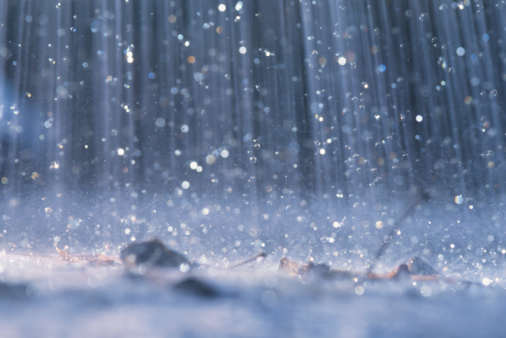
Photo by Tarsem Saini, via Desi Comments

While reading about Oliver Sachs' new book The Mind's Eye and perusing some of his research / articles, I came across the story of John Hull, who recorded his experiences and reflections as he lost his vision and then while living as a newly blinded person.  I read an excerpt from this collection entitled Touching the Rock, and his description of rain and what that means is incredibly poignant ... never thought of it in that way.  Perhaps my own senses, even as a completely able-bodied person, need honing to hear nature's concealed symphony.

One particular passage :

I hear the rain pattering on the roof above me, dripping down the walls to my left and right, splashing from the drainpipe at ground level on my left, while further over to the left there is a lighter patch as the rain falls almost inaudibly upon a large leafy shrub. On the right, it is drumming, with a deeper, steadier sound upon the lawn. I can even make out the contours of the lawn, which rises to the right in a little hill. The sound of the rain is different and shapes out the curvature for me. ... Over the whole thing, like light falling upon a landscape is the gentle background patter gathered up into one continuous murmur of rain.

I think that this experience of opening the door on a rainy garden must be similar to that which a sighted person feels when opening the curtains and seeing the world outside. Usually, when I open my front door, there are various broken sounds spread across a nothingness. I know that when I take the next step I will encounter the path, and that to the right my shoe will meet the lawn. ...  I know all these things are there but I know them from memory. ... The rain presents the fullness of an entire situation all at once, not merely remembered, not in anticipation, but actually and now...

If only rain could fall inside a room, it would help me to understand where things are in that room, to give a sense of being in the room, instead of just sitting on a chair.

This is an experience of great beauty. I feel as if the world, which is veiled until I touch it, has suddenly disclosed itself to me. I feel ! that the rain is gracious, that it has granted a gift to me, the gift of the world...

from RAIN 9 September 1983, in Touching the Rock
(italics are my own)

15 July 2010

Tasting life twice

We write to taste life twice, in the moment, and in retrospection. We write, like Proust, to render all of it eternal, and to persuade ourselves that it is eternal. We write to be able to transcend our life, to reach beyond it. We write to teach ourselves to speak with others, to record the journey into the labyrinth. We write to expand our world when we feel strangled, or constricted, or lonely. We write as the birds sing, as the primitives dance their rituals. If you do not breathe through writing, if you do not cry out in writing, or sing in writing, then don't write, because our culture has no use for it. When I don't write, I feel my world shrinking. I feel I am in a prison. I feel I lose my fire and my color. It should be a necessity, as the sea needs to heave, and I call it breathing.
- Anais Nin

In a world filled with blogs, word litter, and cacophony...  perhaps some more breathing room.

(quote found via Kristin Espinasse's "French word a day" blog)